
Four years after a magic spell erased Peter Parker from the world’s memory, Spider-Man: Brand New Day asks a simple, bruising question: what is left of a hero when nobody remembers the boy under the mask? The answer, in Destin Daniel Cretton’s 2026 Marvel Cinematic Universe entry, is both smaller and stranger than the last trilogy ever dared. This is not another globe-trotting identity crisis or a multiverse reunion tour. It is a street-level, emotionally raw reset that treats adulthood as the real supervillain.
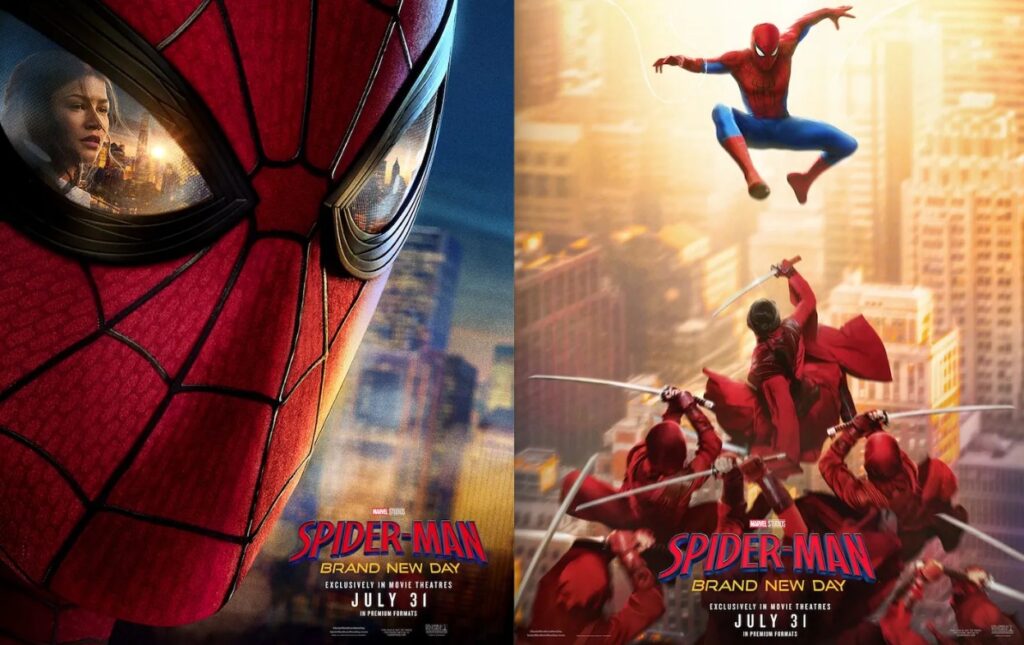
Official theatrical posters for Spider-Man: Brand New Day (2026), showing Tom Holland’s masked hero and a rooftop clash with red-clad Hand ninja.
Sony, Columbia Pictures, Marvel Studios, and Pascal Pictures released the film on July 31, 2026, after a Hollywood premiere at the Dolby Theatre. Runtime sits at 145 minutes. Rating is PG-13 for action violence and some language. Budget was reported around $225 million. By late August 2026 it had already become the highest-grossing film of the year and one of the biggest Spider-Man movies ever made, with worldwide receipts north of $2.2 billion. Critics landed in a generally favorable zone — roughly 89 percent on Rotten Tomatoes with a 7.6 average, 66 on Metacritic — while audiences graded it even hotter. The consensus line from Rotten Tomatoes captures the pitch well: spectacular set pieces, mature emotional stakes, and Tom Holland’s most soulful work as Peter Parker.
That combination is why Brand New Day feels like the first live-action Spider-Man movie in a long time that actually wants to be a Spider-Man movie first and an MCU checkpoint second.
What Spider-Man: Brand New Day Is Actually About
The official logline is clean. Fighting crime full-time in a world that does not remember him — and watching old friends move on without him — sparks a change in Peter he may not have the power to control. That transformation may also be the only thing that can stop a threat nobody can even see.
The story picks up the thread No Way Home left hanging. Doctor Strange’s spell worked. Peter Parker no longer exists in anyone’s memory. MJ and Ned went to MIT. Aunt May is gone. Peter lives in a cramped New York apartment, repairs his own gear with a homemade fabricator, and works the city like a night-shift first responder. Detective Jean DeWolff is one of the few people who treats Spider-Man as a professional contact rather than a celebrity. Frank Castle, the Punisher, keeps crossing his path. The two men do not share a philosophy. They share a zip code and a habit of arriving at the same crime scenes.
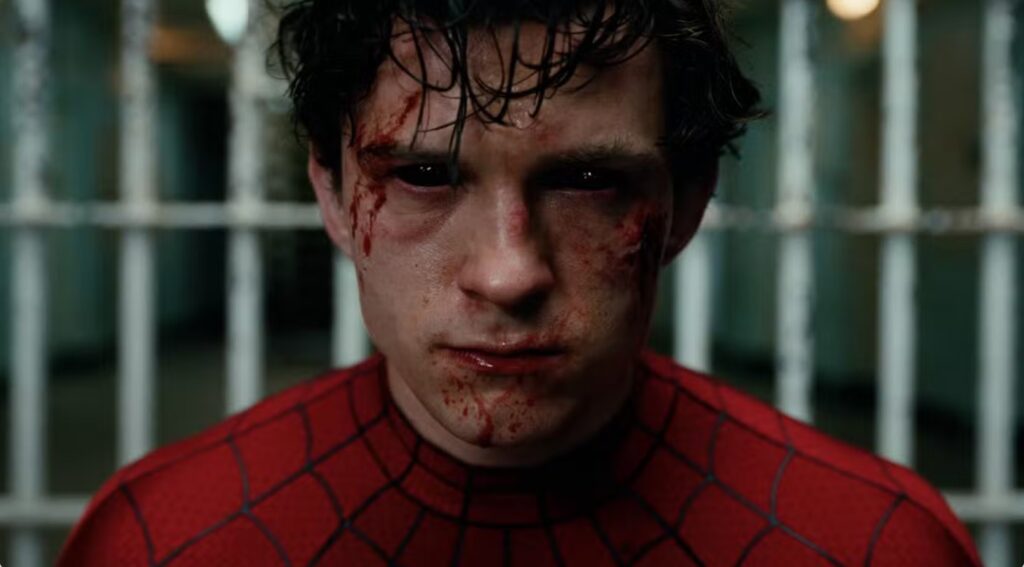
Then the pattern changes. A vengeful presence hops from body to body. Damage Control, the agency that grew out of the Battle of New York cleanup, is hiding something called V-Max. Peter’s own biology starts to mutiny: organic webbing instead of mechanical shooters, senses so sharp they hurt, a flash of aggression that turns the lenses of the mask into something darker. The movie treats that mutation as both a power-up and a warning. Growing up, in this version of the myth, is not a montage. It is a body that will not stay the same.
Cretton and returning writers Chris McKenna and Erik Sommers (with additional work from Justin Kuritzkes) borrow the spirit, not the plot, of the 2008 “Brand New Day” comics. That run reset Spider-Man’s status quo after a controversial deal with Mephisto. The film resets status quo after a spell. Same idea, different devil. The title is a promise: this is a new chapter, not Homecoming 4. This is all about Spider-Man: Brand New Day Review .
Table of Contents
Tom Holland’s Peter Parker, Finally Allowed to Be Alone
Holland has played this character since 2016. Homecoming was high-school nerves. Far From Home was grief with a European postcard. No Way Home was the weight of every other Spider-Man crashing into one kid. Brand New Day is the first time the performance has to carry long stretches with almost no safety net. There is no Tony Stark in the earpiece. There is no Happy Hogan waiting in a car. There is a letter Peter keeps writing to MJ and never sends.
That loneliness is the film’s real special effect. Holland plays exhaustion without making Peter pathetic. The quips are still there, but they land like a guy talking to himself on a fire escape at 3 a.m. When the powers spike — organic webs, blacked-out eyes, a fight style that suddenly looks more animal than acrobat — Holland does not treat it as cool new merch. He treats it as a body that is rewriting the contract. Several critics called this his most emotionally gripping work in the role, and that tracks. The movie needs a Peter who can be funny, furious, and quietly heartbroken in the same scene. Holland has grown into that range.
The new suit helps. It is less Stark-polished, more homemade, closer to the idea that a broke twenty-something is still stitching his own life together. Organic webbing also lets the action team restage swinging and combat with a cartoon elasticity that recalls Sam Raimi’s first two films more than the previous MCU entries. That is not nostalgia bait. It is a visual argument: this Spider-Man is becoming more spider, not more Avenger.
Zendaya, Ned, and the Cost of Being Forgotten
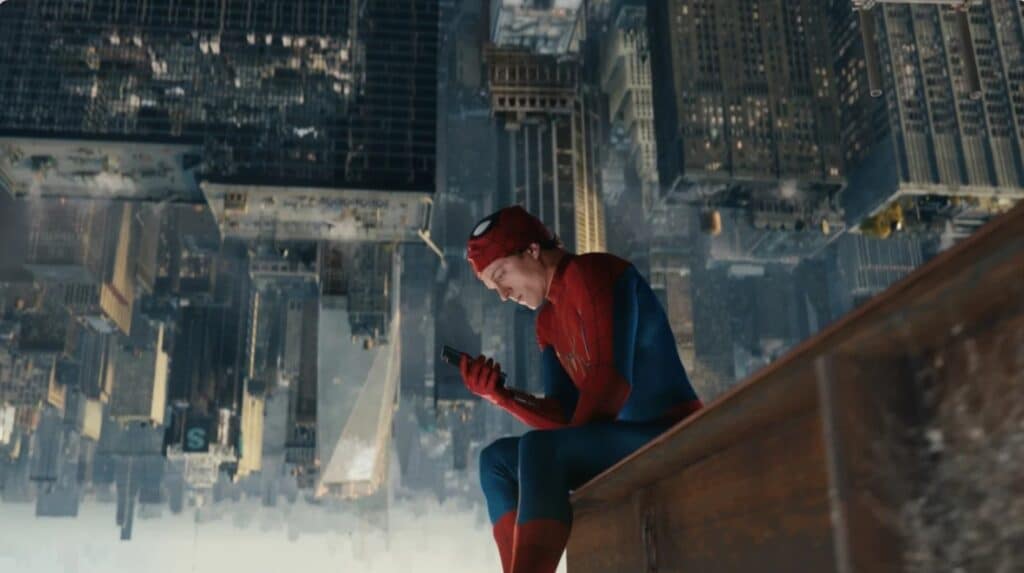
Zendaya’s MJ and Jacob Batalon’s Ned are not erased from the movie. They are erased from Peter. That distinction matters. The film lets both actors play versions of the characters who have moved forward — MIT, new social orbits, a life that does not orbit a secret boyfriend who vanished. Peter watches from a distance, which could have been creepy. The movie mostly keeps it aching instead. A party scene where Peter sees MJ with someone new is not played as a cheap gut punch. It is the moment the mutation accelerates, as if the body decided grief needed somewhere to go.
Batalon remains the film’s warmest instrument. Ned built a Spidey Tracker app because he remembers being saved by a masked stranger, not because he remembers Peter. That is a quietly devastating idea. Friendship reduced to a notification. The late handshake beat — muscle memory doing what the spell forbade — has been widely discussed because it is simple, and because it works. After years of MCU finales that required a sky full of portals, Brand New Day bets on two people remembering a secret handshake. That is the movie in miniature.
Marisa Tomei’s May appears in memory rather than as a living presence, which is the correct, painful choice. The film does not try to undo No Way Home. It lives in the crater.
New Faces, Old Myths: Sadie Sink, the Punisher, and a City Full of Knives
Sadie Sink’s casting was the marketing mystery of the year. After release, the role is Jean Grey — a young mutant whose telepathy can ride other people like stolen cars. The film does not drop her in as an X-Men trailer. It introduces her as a pattern of crimes, a presence that cannot get inside Peter’s head, a hurt kid looking for a kidnapped sister and a classified project inside Damage Control. Sink plays confusion and rage without turning Jean into a gimmick. The performance is one of the reasons the movie’s “villain no one can even see” hook actually lands. Possession stories usually flatten supporting players into puppets. Here the horror is that the puppets still have faces the audience already likes.
Jon Bernthal’s Frank Castle is the other voltage source. The Punisher and Spider-Man have circled each other in comics for decades because they are the same city told in two moral languages. Bernthal plays Castle as a man who thinks mercy is how people get killed. Holland plays Peter as a man who thinks killing is how you become the thing you fight. Their scenes have buddy-comedy rhythm without sanding off the ethical scrape. Some reviews called it the spark the movie needed; others wanted Castle used less as comic relief. Both reactions make sense. The contrast is the point. A hero who will not take a life and a vigilante who will not leave one standing cannot share a rooftop forever.

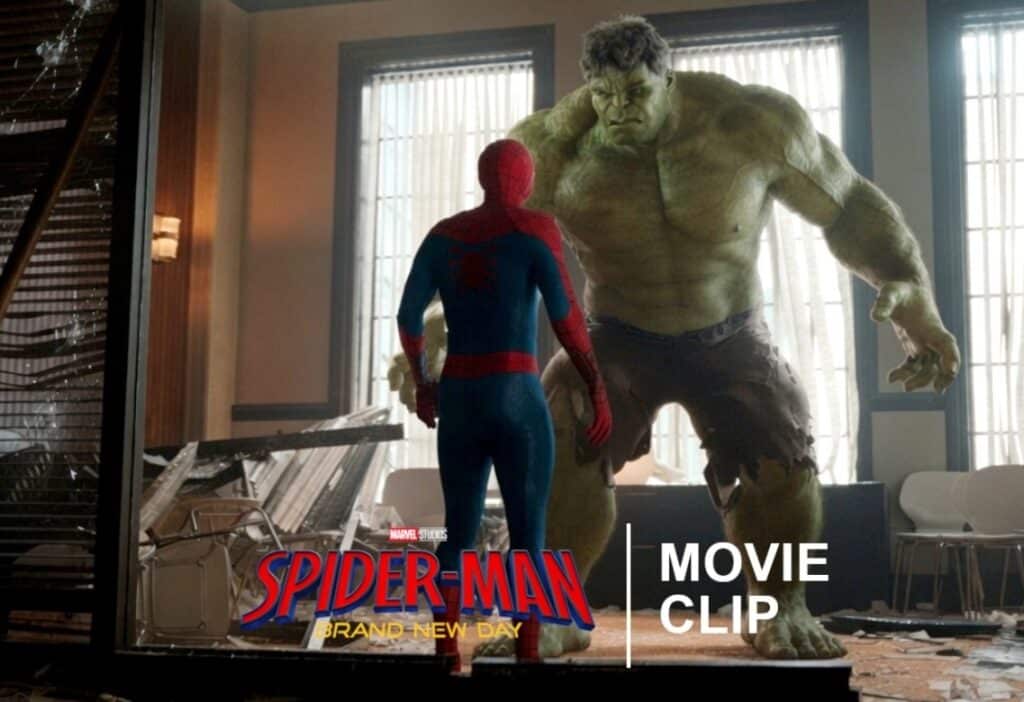
Mark Ruffalo’s Bruce Banner arrives as a professor trying to stay human with an inhibitor, then as the problem that happens when that inhibitor fails. The Hulk sequence is one of the film’s biggest swings — literally — and it gives Cretton a chance to stage destruction that still feels tied to Peter’s street rather than a generic CGI skybox. Florence Pugh’s Yelena Belova slides through as a warning system and a reminder that the wider MCU still exists. Tramell Tillman, as Damage Control director Bill Metzger, is the bureaucratic face of a darker idea: institutions that collect power the way villains collect victims. Michael Mando’s Scorpion, Marvin Jones III’s Tombstone, and the return of the Hand keep the rogues gallery local. This New York has gangs, ninjas, and a government warehouse full of secrets. It does not need another alien army.
Liza Colón-Zayas as Detective Jean DeWolff is a deep-cut gift for comics readers and a practical anchor for everyone else. A cop who respects Spider-Man without worshipping him gives the film a civilian texture the previous trilogy often skipped.
Destin Daniel Cretton Puts Spider-Man Back on the Pavement
Jon Watts made three charming, quippy, somewhat weightless Spider-Man movies that lived comfortably inside Marvel house style. Cretton, coming off Shang-Chi and the Legend of the Ten Rings and the series Wonder Man, wants dirt under the fingernails. Cinematographer Brett Pawlak shoots New York as a character that can be beautiful and hostile in the same frame. The city is not a green-screen postcard. It is tenements, river light, Damage Control concrete, and rooftops where a kid eats cheap food between patrols.
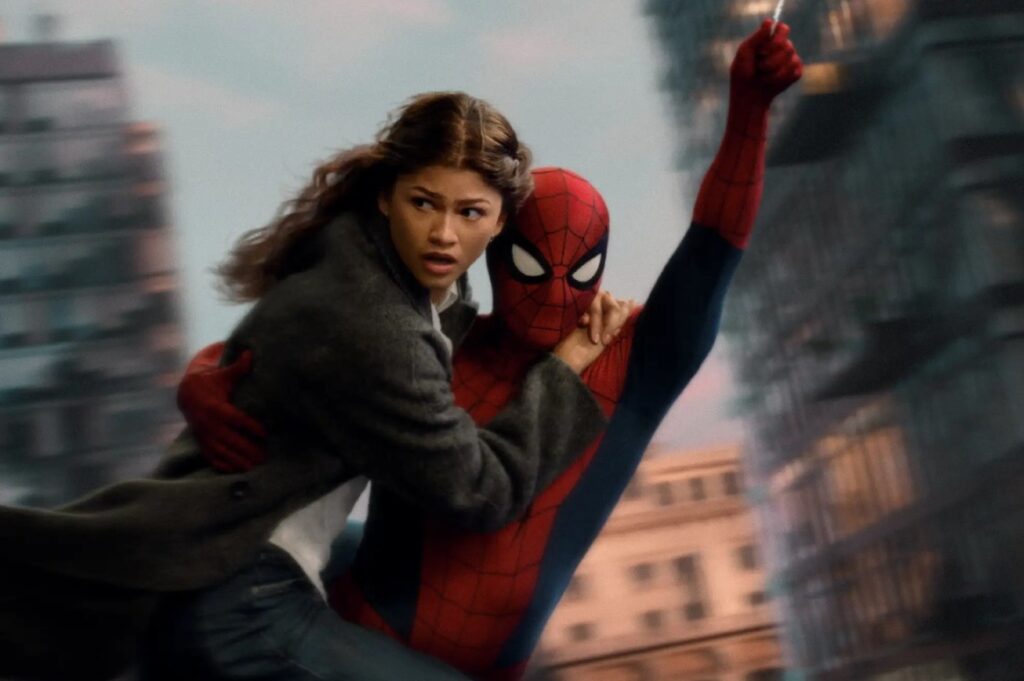
Action is the movie’s other thesis. Organic webbing changes the grammar of a fight. Webs can become nets, slings, tripwires, and sudden wings. Several set pieces — a tank chase, a vertical building battle, a Hand assault that looks choreographed like a comic splash page — have been compared to Raimi’s Spider-Man 2 for good reason. They are readable. The camera follows bodies, not just explosions. When the film goes big with Hulk, it still cuts back to Peter’s face, which is how you keep a kaiju sequence inside a character study.
Michael Giacchino’s score knows when to swell and when to get out of the way. The needle-drop instinct of earlier MCU Spidey films is quieter here. Silence, traffic, and the creak of a fire escape do more work.
The movie is also long. One hundred forty-five minutes is not outrageous for a summer event film, but a few mid-section detours — extra MCU housekeeping, an extra villain beat, an extra lab scene — make the middle feel episodic. Variety’s review called it arduous and half an hour too long. That is the fairest knock. Brand New Day has a lean emotional spine and a slightly overfed plot. When those two fight, the spine usually wins, but not always.
Themes: Adulthood, Mutation, and the People Who Want What Makes You Special
Spider-Man stories have always been coming-of-age stories wearing a red suit. Homecoming was adolescence. Far From Home was the first funeral. No Way Home was consequences. Brand New Day is the part nobody puts on a poster: the years after the noble sacrifice, when the apartment is quiet and the people you saved are thriving without you.
The mutating powers are the metaphor that could have been silly and instead feel uncomfortably right. Bodies change. Strength arrives with symptoms. What used to be a gift starts to look like a condition. Peter’s black-eyed combat mode is not a new skin for the video-game store. It is the movie asking whether the hero is still a person if the spider keeps winning the vote.
Jean Grey’s arc rhymes with that question. A young woman with a power everyone wants to contain, study, or weaponize is not just an X-Men teaser. She is the other side of Peter’s isolation. He hid himself so the world would be safe. She is hunted because the world wants what is inside her. The New York Times review floated the idea that the film taps a modern anxiety: growing up and discovering that everyone can see what makes you special and wants it for themselves. That reading fits Damage Control as much as it fits the mutant plot. Institutions in this movie do not just clean up alien wreckage. They inventory it.
Grief is the third rail. Peter visits May’s grave. Jean is looking for her sister. The film lets those losses talk to each other without a speech about the five stages. The most effective scenes are almost small: a letter, a handshake, a shared memory offered like a truce.
Responsibility, the oldest Spider-Man word, gets rewritten for adulthood. It is no longer “with great power comes great responsibility” as a high-school motto. It is “with great power comes the temptation to disappear so nobody else has to pay.” The movie does not pretend disappearing worked. It also does not pretend reappearing is simple.
How It Compares to the Rest of the Spider-Man Film Canon
Live-action Spider-Man has three major modern eras: Raimi’s mythic soap opera, Marc Webb’s romantic reboot, and the MCU’s quippy kid who lucked into the Avengers. Brand New Day is the first Holland film that wants the texture of the first era without abandoning the third.
Comparisons to Spider-Man 2 (2004) keep appearing in reviews because both movies understand that the best set piece is a man who can barely hold his life together swinging between buildings. Both movies treat New York as a co-star. Both movies let a supporting character — Otto Octavius then, Jean and Frank now — carry a tragedy that is not just fuel for the finale. Whether Brand New Day actually surpasses Raimi’s peak is fan-forum sport. What is harder to argue is that it is the most Spider-Man of the MCU entries: local, lonely, physically inventive, and more interested in the mask as a burden than as a brand.
Against No Way Home, the new film is almost a correction. That 2021 smash was a love letter to every costume in the attic. This one closes the attic and turns off the lights. Multiverse cameos are not the engine. Street crime is. Some viewers will miss the event-movie sugar rush. Others will be relieved that a Spider-Man movie can end on a handshake instead of a skybeam.
The animated Spider-Verse films still own a different kind of formal brilliance. Brand New Day does not try to out-animate them. It tries to out-human the live-action series that came before it.
What Works, What Snags, and Who Might Bounce Off
What works:
- Holland’s performance, which finally has room to be adult without becoming grimdark.
- The Peter/Punisher chemistry, a moral argument disguised as banter.
- Action that can be followed with the naked eye.
- New York photographed like a place people actually live.
- Sink’s Jean Grey as a person first, a franchise key later.
- A willingness to let Peter be bad at being okay.
What snags:
- A middle hour that collects plot coupons — Damage Control, Hand, Scorpion, Hulk, mutant mystery — faster than it metabolizes them.
- MCU connective tissue that occasionally yanks the camera away from the apartment and the beat cop.
- A few jokes that still sound like they were focus-grouped for a trailer.
- Length. The last twenty minutes earn their size. Some of the earlier twenty do not.
- A villain structure that stays murky by design, which is thematically correct and narratively frustrating for anyone who wants a clean opposite number like Green Goblin or Doc Ock.
Families who loved the lighter Holland films should know this one is sadder. It is still PG-13, still full of swinging and one-liners, still a crowd movie. It is also a film about a young man who erased himself and then had to live with the silence. That is heavier than a field trip to Europe.
Comics readers will clock Jean DeWolff, Tombstone, organic webbing, and the Brand New Day title drop. Casual viewers do not need any of that. The movie explains enough. It just assumes the audience can sit with ambiguity for a while.
Box Office, Scores, and Why the Timing Matters
The commercial story is almost as loud as the web-shooters. Domestic opening weekend numbers landed in the historic tier, with a global launch that immediately entered the conversation with Avengers: Endgame. Within weeks the film had crossed the $2 billion worldwide line, becoming the highest-grossing title of 2026 and the first Spider-Man film to hit that mark. Domestic grosses climbed toward the mid-to-high $800 million range as the run continued. Those figures matter because they answer a question Hollywood has been asking since the last wave of superhero fatigue: will people still show up for a masked hero if the story is sadder and more local? In this case, yes. Loudly.
Critical scores tell a slightly more complicated story. An 89 percent Tomatometer with a 7.6 average is strong, and it is also the lowest Rotten Tomatoes number of Holland’s solo run. That gap is useful. No Way Home was a phenomenon. Brand New Day is a movie. Some reviewers wanted more joy. Some wanted less homework. Audience scores and CinemaScore grades stayed hotter than the critic curve, which usually means the film is connecting with the people who bought the ticket for Peter, not for the phase chart.
Culturally, the film functions as a soft reboot of the Holland era and a hard handshake toward mutants in the MCU. Jean Grey’s presence is not a mid-credits joke. It is a plot. That will shape whatever comes next, including the already-teased idea that Spider-Man will return — and, if the post-credits tracker is any hint, not necessarily on the same planet.
The Post-Credits Question and the Road Ahead
Without turning this into an ending explainer, the film leaves two doors open. One is personal: Peter deciding that isolation was a kind of cowardice dressed up as nobility. The other is cosmic: a tracker that loses Spider-Man in New York and finds a signal somewhere far stranger. “Spider-Man will return” is the old Bondian promise. The tracker gag is the new one. Together they suggest the next movie can be a neighborhood story or a space story or both. After a film this grounded, either choice will feel like a swing.
Holland has not publicly locked in a fifth film in every interview, but the text on screen is not coy. The character still has a city, a mutation, a mutant ally/adversary, a Punisher problem, and friends who might remember him if he lets them. That is more runway than most franchise leads get after four movies.
Final Verdict: A Brand New Day That Mostly Earns the Title
Spider-Man: Brand New Day is not a perfect movie. It is a necessary one. It takes a character who had become the MCU’s friendliest guest star and puts him back in a cheap apartment with a broken heart and a body that will not behave. Destin Daniel Cretton stages action with showmanship. McKenna and Sommers, for all the extra plot they pack in, remember that the myth only works if Peter Parker is a person first. Tom Holland, at last, is allowed to play that person as an adult.
Is it the best Spider-Man film since 2004? Plenty of critics have said so, and the comparison is flattering even when it is slightly too eager. A safer claim is this: it is the best argument yet that the Holland series can survive without Iron Man’s shadow, without a high-school bell schedule, and without a multiverse guest list. The web-slinging is gorgeous. The jokes still land. The ache lasts longer than the credits.
For anyone who has ever outgrown a version of themselves that other people preferred, the movie has a surprisingly honest pulse. Peter Parker saved the world by disappearing. Brand New Day is about the morning after, when the world is fine and the hero is not. That is not the flashiest Marvel idea. It might be the most human one they have given this character.
Score: 8.2 / 10
Recommended for: longtime Spider-Man fans, MCU viewers ready for a more grounded Phase Six, anyone who thought the last trilogy was fun but weightless, and audiences who can handle a superhero movie that is actually about loneliness.
Skip or wait for digital if: the only desired mode is wall-to-wall quips and cameo roulette, or if a 145-minute runtime with a somber mid-section sounds like work.
Quick Facts for Searchers
- Title: Spider-Man: Brand New Day
- Release date: July 31, 2026 (U.S.); premiere July 27, 2026
- Director: Destin Daniel Cretton
- Writers: Chris McKenna & Erik Sommers
- Stars: Tom Holland, Zendaya, Sadie Sink, Jacob Batalon, Jon Bernthal, Mark Ruffalo, Florence Pugh, Tramell Tillman, Michael Mando
- Runtime: 2 hours 25 minutes
- Rating: PG-13
- Budget: about $225 million
- Worldwide box office: over $2.2 billion
- Rotten Tomatoes: ~89% critics / very high audience
- Metacritic: 66
- Where it sits: 38th MCU film, fourth Holland solo, start of a new chapter after No Way Home
Frequently Asked Questions
Is Spider-Man: Brand New Day a sequel to No Way Home?
Yes. It is set about four years later and deals directly with the consequences of Strange’s memory spell.
Do you need to watch the other MCU films first?
The Holland trilogy is essential. Wider MCU homework helps with Banner, Castle, Yelena, and Damage Control, but the emotional story is readable on its own.
Is Sadie Sink in it as Jean Grey?
Yes. The marketing hid the name; the finished film does not treat her as a blink-and-miss cameo.
Is it kid-friendly?
PG-13, with cartoonish violence, some language, possession horror, and heavy themes of grief and isolation. Fine for most teens. Younger kids may find the tone darker than Homecoming.
Is there a post-credits scene?
Yes. Stay. The mid-film character work is the meal; the tag is the dessert and the sequel hook.
Is it better than No Way Home?
Different job. No Way Home is a crossover event. Brand New Day is a character reset. Many reviews prefer this one’s focus. Many audiences still prefer the 2021 sugar high. Both can be true.
follow me on SPOTIFY As Discovering With Dev