Eight years after a dusty Uttar Pradesh town became streaming shorthand for guns, gaalis and gaddi politics, Mirzapur has done something Indian OTT almost never attempts. It has left the pause button behind and walked into a multiplex. Mirzapur: The Movie, directed by series veteran Gurmmeet Singh and written by creator Puneet Krishna, opened in Hindi and Telugu on 4 September 2026. The question hanging over every ticket was simple: can a world built for binge-watching survive three hours of theatrical light, CBFC cuts and the demand that a film actually end?
The short answer in this Mirzapur The Movie review is yes — with conditions. The film is loud, long, proudly familiar and often very entertaining. It is also padded, predictable in stretches and clearly designed first for people who already know who sits on that throne. That is not a crime. It is a strategy. And on opening weekend, the strategy is working.
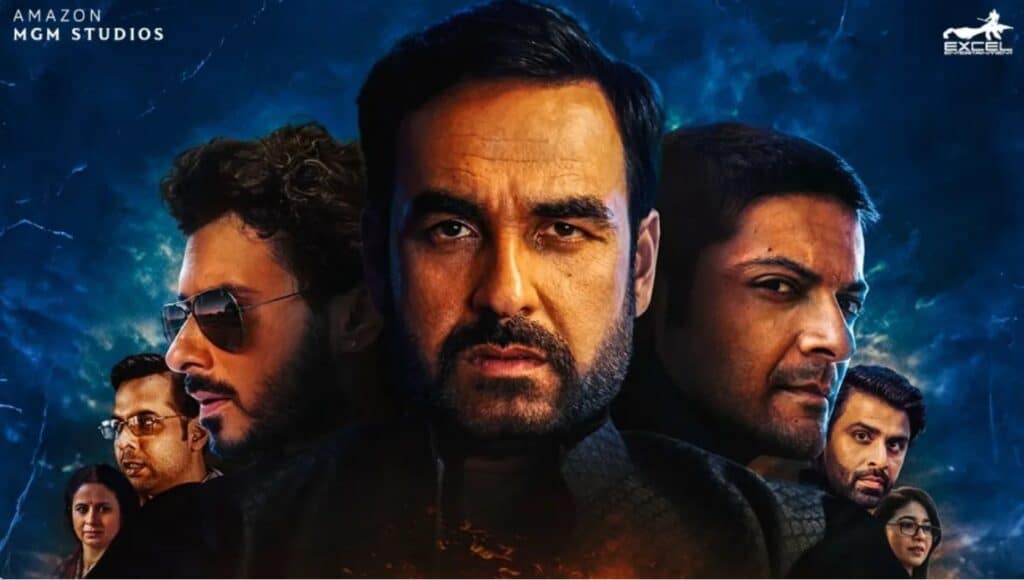
Table of Contents
What Mirzapur The Movie Actually Is
This is not Season 4 wearing a cinema costume. The makers have been unusually clear about that. The film is a standalone, largely self-contained chapter set in 2018, in the space around the first season of the Prime Video show — specifically the gap between the mid-season rise of the Pandit brothers and the bloodbath that closed that season. Characters the series later killed are alive here. Rivalries that ended with a bullet take different turns. The official logline stays vague on purpose: the battle for Mirzapur’s throne escalates, old enemies return, new threats arrive, and blood debts come due.
That choice does two jobs at once. For series fans, it is a “what if this chapter had the budget of a film” detour. For first-time viewers, it is meant to function as a complete crime saga about fathers, sons, ambition and the cost of sitting on a wooden chair that everyone treats like a crown. Ali Fazal has said the film was written so that people who have never watched an episode can still follow it, while people who have watched every episode will feel the logic lock into place. That is a tall order. The movie mostly keeps the promise — then spends an extra forty minutes reminding the audience it kept the promise.
The Story, Without Burning the House Down
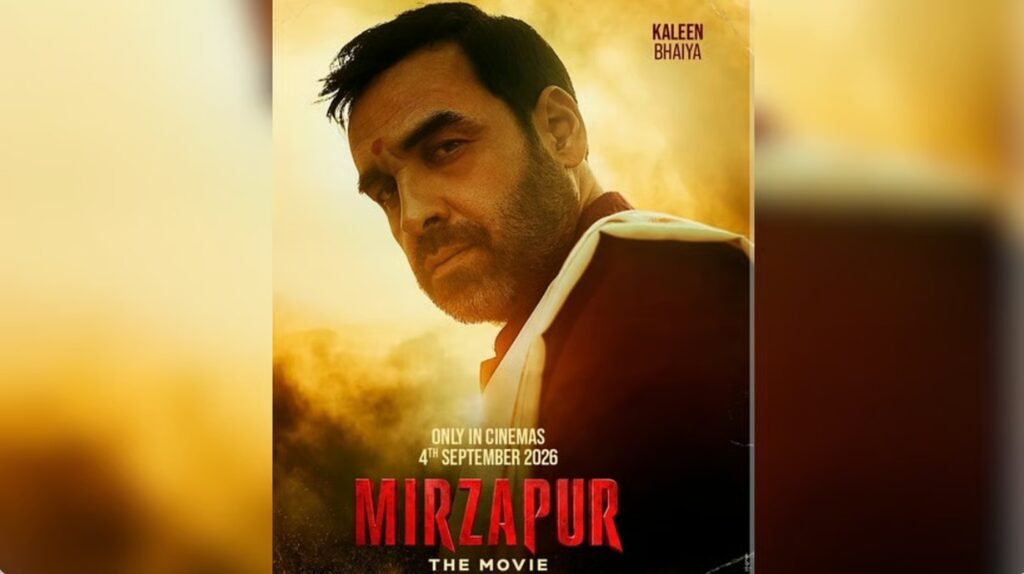
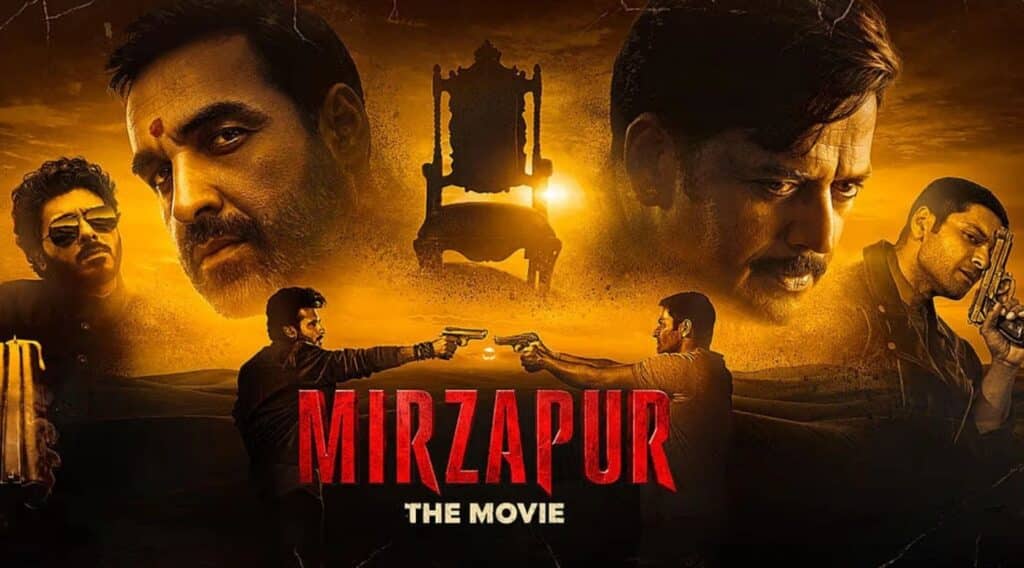
Akhandanand Tripathi — Kaleen Bhaiya — still runs Mirzapur the way a man runs a family business that happens to include carpets, opium and firearms. Pankaj Tripathi plays him with the same unnerving calm that made the character a national meme and a national warning. His son Munna wants the gaddi before he has earned the patience to sit on it. Guddu and Bablu Pandit, sons of an honest lawyer, are already inside the machine and rising fast enough to make Munna sweat. Beena watches the household from a position the series often reduced to desire; here she is allowed more calculation. Golu and Sweety pull the story toward the Gupta household. Compounder remains the franchise’s most reliable human punchline and occasional moral compass.
Into that already crowded courtyard walks Babban Yadav, played by Ravi Kishan — a new contender who does not care about the show’s mythology. He wants the city. The film’s extra scale, the desert stretches, the convoy shots and the bigger set-pieces all grow out of that threat. The story travels beyond the familiar lanes of Purvanchal into Rajasthan, which is where the camera finally starts behaving like a theatrical feature instead of a very expensive episode.
The plot is not reinventing the wheel. Power is threatened. Loyalty is tested. A wedding, a deal, a kidnapping and a reckoning arrive in the order crime films have used for decades. What the script understands — and what a lot of OTT-to-film transfers forget — is that Mirzapur was never only plot. It was texture: the way a man nods instead of shouting, the way a joke lands two seconds after a killing, the way a family dinner can feel more dangerous than a shootout. When the movie stays inside that texture, it hums. When it stops to explain the texture to the back row, it sags.
Performances: The Reason the Ticket Still Makes Sense
Start with Pankaj Tripathi, because every honest Mirzapur The Movie review has to. Kaleen Bhaiya is one of those rare Hindi-screen creations that got bigger than the actor and then returned the favour. Tripathi does not inflate the role for 70mm. He shrinks the room around it. A look. A pause. That famous tilt of the head. The film gives him a few mass gestures the series could not afford, but the performance still lives in stillness. In a 197-minute movie full of men announcing themselves, the quietest man remains the most expensive presence in the frame.
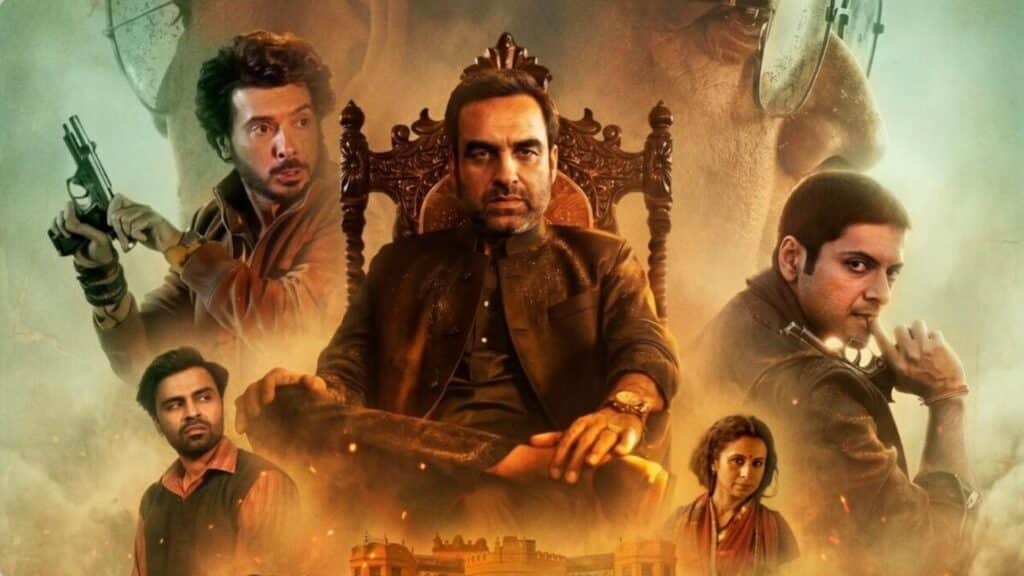
Divyenndu’s Munna is the crowd engine. Public shows have already made that obvious. Munna was always the character audiences loved and feared in the same breath — insecure, theatrical, violently funny, convinced that swagger is a succession plan. On a big screen, that insecurity reads even larger. Divyenndu plays the son who cannot stop performing power long enough to hold it. Several of the film’s whistle moments belong to him, and the marketing knew it: bringing Munna back after the series moved past him was the single smartest commercial decision in the package.
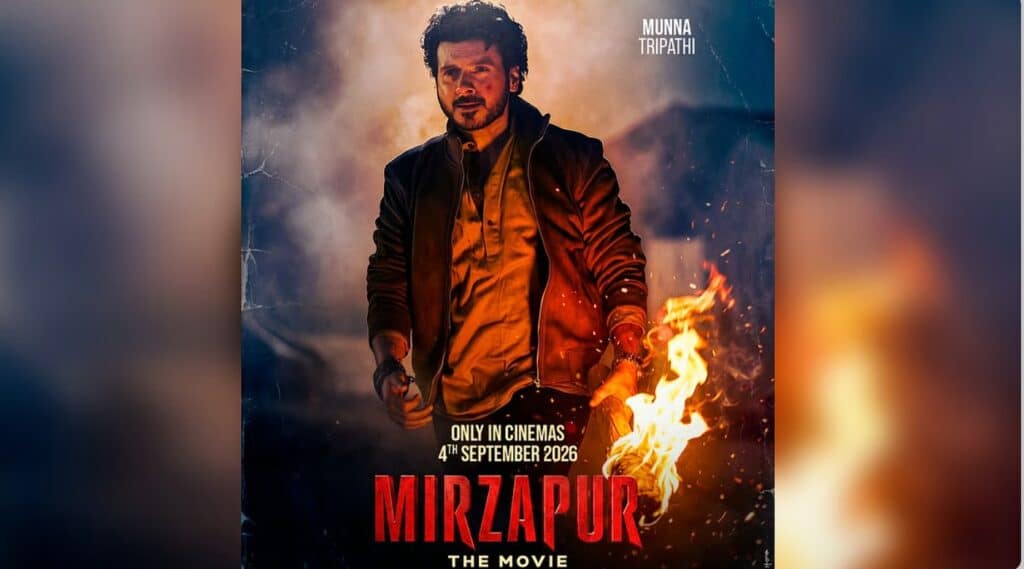
Ali Fazal’s Guddu is the film’s physical centre. The body has always been part of the character’s joke and its tragedy — a man built like a wall who still thinks with his heart first. Fazal looks even more imposing here, and the action design uses that. Guddu is not a stylish hero. He is a blunt instrument who keeps discovering he has feelings. That combination still works. The romance with Sweety (Shriya Pilgaonkar) is given more air than some viewers may expect from a film this bloody, and it is one of the reasons the middle hour does not completely flatten.
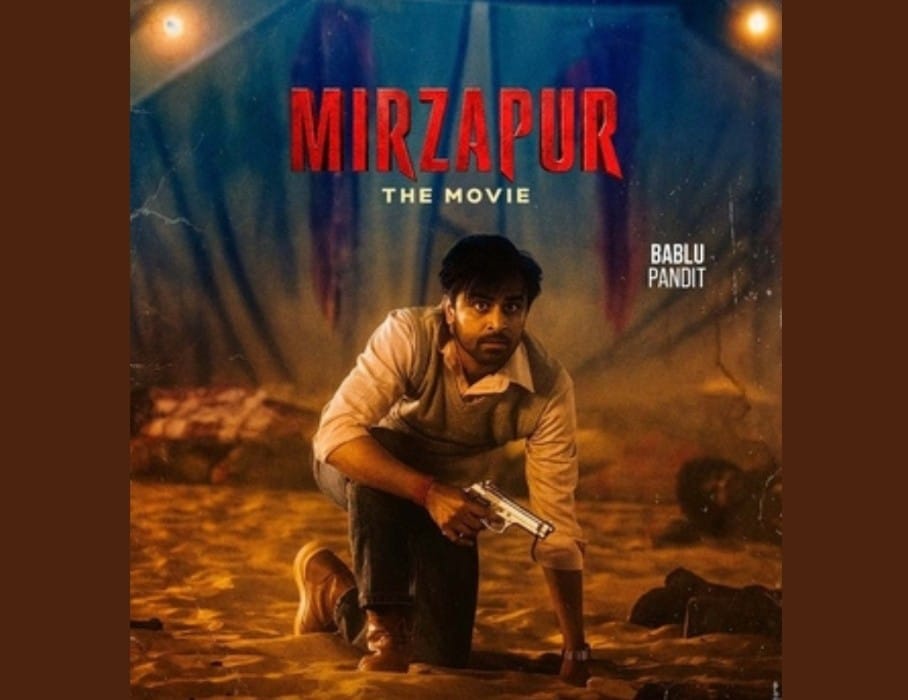
Then there is the recast that every preview article treated like a landmine. Jitendra Kumar plays Bablu Pandit, the role Vikrant Massey originated. Recasting a beloved dead-in-the-series character is the kind of move that can sink a fan film before the interval. It does not sink this one. Kumar does not imitate Massey’s nervous intelligence beat for beat. He plays Bablu as the sharper, more anxious half of the brother act — the one who can see the trap while Guddu is already walking into it. Audience acceptance has been warmer than the pre-release noise suggested, helped by a character poster and an arc that gives Bablu his own dirt-and-gun iconography instead of treating him as a substitute.
Ravi Kishan is the injection of new blood the story needed. Babban Yadav is written as a man who did not grow up inside Kaleen’s rules, so he does not respect them. Kishan switches, sometimes in the same scene, from courtly menace to unexpected softness. Critics who liked the film almost always name his entry as the point where the narrative stops being a reunion and starts being a movie. That is fair. Without Babban, this would be three hours of people we already know circling the same chair. With him, the chair is actually in danger.
The supporting bench is deep enough to stock another season. Rasika Dugal’s Beena is the clearest upgrade from the show’s early framing of the character. She is still caught in a rotten household, but the film lets her want something besides survival and spite. Shweta Tripathi’s Golu remains the franchise’s steadiest female pulse. Abhishek Banerjee’s Compounder continues to steal minutes he is not officially assigned. Rajesh Tailang and Sheeba Chaddha ground the Pandit family. Kulbhushan Kharbanda’s Bauji brings back the rotten patriarch energy that made the first season so uncomfortable. Sonal Chauhan, Harshita Gaur, Mohit Malik and the rest fill a canvas that is, if anything, too full. When every returning face gets a look, a line and a subplot, a movie starts to feel like a roll call.
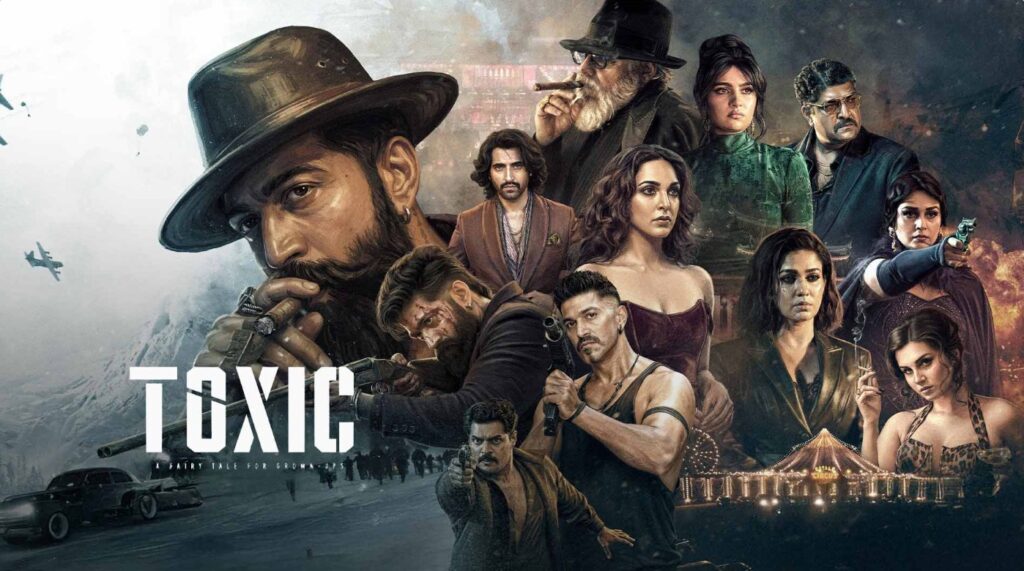
Toxic Movie Review 2026: Yash’s Lavish Gangster Fairy Tale for Grown-Ups
Direction and Craft: Series Instincts, Cinema Budget
Gurmeet Singh has directed a large number of Mirzapur episodes. That is both the film’s safety net and its limitation. He knows where the laughs sit, how long a stare should last, when a gaali is punctuation and when it is just noise. He also stages action with more spatial ambition than the show could manage on a streaming schedule. The Rajasthan portions — Jaisalmer and Jodhpur schedules after Varanasi and Mumbai — give the images heat, dust and horizon, which the series rarely had. Cinematographer Sanjay Kapoor shoots faces like icons and streets like pressure cookers. The big-screen treatment is real. This does not look like a padded episode. It looks like the same world with more money and more sky.
Where the series instinct hurts the film is structure. A season can afford three detours and a mid-episode song of violence. A theatrical film, even one certified at 197 minutes, has to choose. Mirzapur: The Movie often refuses to choose. Subplots bloom because the universe has always allowed them to bloom. Some of those blooms are fun. Some are simply there so a favourite character can have a scene. India Today’s review put it bluntly: the makers were so busy protecting every relationship that they forgot they were making a film, not a ten-episode drop. That critique sticks.
The action itself is raw rather than glossy. Bodies fall the way they fell on Prime Video — ugly, sudden, a little comic if the film wants them to be. The difference is impact. A shotgun in a hall sounds like a shotgun in a hall when the speakers are the size of a door. Several confrontations are built as theatrical “points,” the kind of moments that make a Friday night crowd shout a name. Taran Adarsh called it a peak mass entertainer that does not feel like a stretched episode; other critics called the same quality overindulgence. Both readings can be true in the same auditorium.
Writing, Tone and the Nostalgia Contract
Puneet Krishna’s script is a greatest-hits album that also tries to write two new tracks. The hits are obvious: father-son rot, brotherly loyalty, the joke that lands on a corpse, the political handshake that is actually a threat. The new tracks are Babban’s siege and a slightly more open emotional lane for Beena, Sweety and the Pandit women. Dark humour still works. The film understands that Mirzapur without laughter is just another grim gangster picture, and India already has warehouses of those.
What the writing will not do is surprise anyone who has lived with this franchise. The shape of the conflict is visible from the first act. The pleasures are in the playing, not the plotting. That is fine for a companion piece. It is thinner if someone walks in expecting the shock of 2018, when the show still felt like it might do anything. Shubhra Gupta’s Indian Express review captured the double vision well: viewers who know the series can pinpoint the beats; viewers who never watched it can still be startled. The movie papers over its flabby bits with speed and an intriguing last stretch. That is a critic’s way of saying the engine coughs and then, suddenly, it roars.
There is also a mid-credits and end-credits appetite that the film is not shy about feeding. Reviews have flagged an epilogue and a sting that stopped walkouts. This review will not describe them. They exist. They are aimed at people who want this universe to keep growing on a screen larger than a laptop. Whether that growth becomes Mirzapur The Movie 2 or folds back into Season 4 is a business question. The film is already asking it.
Music, Sound and the Word “Bhaukaal”
John Stewart Eduri’s score does the heavy lifting the songs cannot. The background music is one of the elements even cooler reviews admit works. It punches entries, holds stares and turns a corridor walk into a statement. The song album, released under Excel’s new Excel Records partnership with Universal Music India, leads with Dhanda Nyoliwala’s “Do Numbari” and includes “Vaaroon Forever,” an extended recreation of the series track “Vaaroon.” The music is not trying to become a chart event first. It is trying to sound like Mirzapur with a wider dynamic range. In the hall, that is the correct priority.
Sound design matters more here than in most Hindi crime films because the franchise’s identity is oral. The dialect, the abuse, the suddenly formal sentence in the middle of a threat — that is the brand. The CBFC’s A certificate came with muted profanity in ten places, a few word swaps and a trimmed intimate passage. Violence and gore were largely left alone. The result is still an adults-only film that sounds like itself, just with a handful of words sanded down. Anyone walking in with children because “it’s the show we watch at home” is making a mistake the certificate already tried to prevent.
The Women of a World That Rarely Makes Room
A recurring complaint about the series was how it looked at its women. The film does not magically fix that history, but it does redistribute a little power. Rasika Dugal gets plot, not only atmosphere. Shweta Tripathi is not asked to wait in a room while the men finish the story. Shriya Pilgaonkar’s Sweety is written as a reason Guddu might want a life that is not only revenge. Harshita Gaur’s Dimpy and Sonal Chauhan’s Mumtaz Bibi add texture rather than trophies, even if the runtime does not always know what to do with that texture.
This is still a film about men and a chair. Anyone expecting a feminist rewrite of Purvanchal will leave annoyed. Anyone willing to notice that Beena is no longer only a symbol will see the one real writing advance the movie makes over early Mirzapur. That advance is modest. It is also welcome.
Box Office: A Non-Star Film That Opened Like a Star Film
Opening-day numbers vary slightly by tracker, which is normal in the first 48 hours, but the shape is consistent. India net on Day 1 landed in the mid-20 crores — estimates cluster around ₹24.75 crore to a little over ₹28 crore depending on the source — with India gross near ₹30–33 crore and a small overseas add-on. The Hindi version did almost all the work. The Telugu dub was symbolic, not commercial. Occupancy on Friday was strong for an A-certified, non-traditional-star film, with some North and Purvanchal belts leading the charge. Trade stories placed the opening among 2026’s biggest Hindi starts and ahead of recent adult-audience successes such as Awarapan 2.
That matters because this cast does not usually open a film at that altitude. Pankaj Tripathi is a prestige-and-love actor, not a first-day-first-show industrial engine in the Shah Rukh or Salman sense. Ali Fazal and Divyenndu are franchise faces, not standalone openers. The opening is the brand opening. Mirzapur the title sold the show. Now Mirzapur the title is selling the movie. Weekend projections talked about a possible ₹50 crore India net run across the first three days if Saturday and Sunday hold. Whether the film has legs after the fan wave is the next test. Long films with A certificates often drop hard on Monday. Word of mouth that calls the second half stronger than the first could slow that drop. Word of mouth that only says “too long, but the climax slaps” could accelerate it.
Reported budget figures as high as ₹250 crore have circulated; treat that number as a claim, not a balance sheet. Even at a more conservative spend, a film this size needs more than a fan-opening Friday. It needs the curious, the date-night crowd and the repeat viewer who wants to hear a particular dialogue land again. Early public reactions on booking platforms have been noisy and mostly warm — blockbuster tags, acting tags, a smaller set of “one-time watch” and “overlong” notes. That mix is exactly what a cult adaptation usually gets.
Who This Film Is For — and Who Should Wait for Prime
Watch it in a cinema if the series is already part of the household language. The scale, the crowd, the sound of a hall answering Munna or Kaleen — that is the value addition. A laptop cannot manufacture that. Watch it in a cinema if the idea of a dusty crime epic with jokes, romance and a new villain sounds like a good Friday even without homework. The first act does enough orientation that a new viewer will not be lost, only occasionally aware that other people are laughing at private jokes.
Wait for streaming if runtime is a deal-breaker, if A-certified verbal and physical violence is not the night’s plan, or if Season 3’s fatigue is still sitting in the system. This movie does not fix the complaints some viewers had about later seasons. It goes back to the season that made the brand and spends theatrical money on it. That will feel like a gift to some and like a loop to others.
A practical note for series viewers who want the cleanest landing: the widely shared viewing tip has been to revisit Season 1 through the mid-season stretch, not to binge all three seasons as if this were a sequel. The film is an untold 2018 chapter, not a recap of 2024’s streaming finale. Treat it that way and the recast, the resurrected faces and the new antagonist all make structural sense.
The Bigger Picture: Can an OTT Town Become a Cinema Town?
Indian entertainment has spent a decade arguing that the future is the phone. Mirzapur: The Movie is a counter-argument with a marketing budget. Excel and Amazon are not subtle about it. The teaser in June, the trailer in August, the character posters, the “bhaukaal on the big screen” line — all of it framed the film as an event, not a bonus episode. The risk was real. Theatrical audiences have punished films that felt like television. They have also rewarded films that felt like worlds.
This one feels like a world. That is its best defence against the runtime. The dust, the dialect, the family that is also a firm, the way power in a small city can look like religion — those things were always cinematic. The show just happened to arrive when cinema was busy losing people to sofas. Putting the same world in a dark hall is less a leap than a delayed homecoming.
The film will not convert every sceptic. Some reviews have called the story thin, the villain short of iconic, the middle an overdose of dialogue. Those notices are not invented. There are stretches where the movie talks because talking is what Mirzapur does, not because the scene needs another paragraph. There are also stretches — Kaleen in a room, Munna spiralling, Babban arriving, the last-act collision — where the theatrical gamble looks obvious and correct.
Verdict
Mirzapur: The Movie is a companion, not a replacement, and a crowd film, not a reinvention. Pankaj Tripathi still owns the silence. Divyenndu still owns the noise. Ali Fazal still owns the bruised heart inside the muscle. Jitendra Kumar survives a recast that could have been a disaster. Ravi Kishan gives the plot a reason to exist beyond reunion. Gurmmeet Singh knows this town too well to embarrass it and not quite ruthlessly enough to trim it.
Is it the sharpest crime film of 2026? No. Is it a satisfying way to spend a loud weekend with characters that already live in the culture? For a large part of the audience that showed up on 4 September, yes. The bhaukaal was always going to look bigger on a wall. The surprise is that it still sounds like itself.
Rating: 3.5 / 5
A paisa-vasool mass companion to the series — overlong, familiar, often roaring, and held together by a cast that remembers exactly why this town became famous.
Quick Facts
- Film: Mirzapur: The Movie
- Release: 4 September 2026 (Hindi and Telugu, theatrical)
- Director: Gurmmeet Singh
- Writer: Puneet Krishna
- Producers: Ritesh Sidhwani, Farhan Akhtar (Excel Entertainment); Amazon MGM Studios
- Cast: Pankaj Tripathi, Ali Fazal, Divyenndu, Jitendra Kumar, Ravi Kishan, Rasika Dugal, Shweta Tripathi, Shriya Pilgaonkar, Abhishek Banerjee and others
- Runtime: 197 minutes
- Certificate: A
- Day 1 India net: approximately ₹24.75–28 crore (tracker-dependent)
follow me on SPOTIFY As Discovering With Dev