Some films do not knock on the door. They wait at the tree line after sundown and ask whether the audience is willing to step past a warning painted in folklore. The Vvaan: Force of the Forrest, which opened in Indian theatres on 25 September 2026, is that kind of film — uneven, earnest, sometimes clumsy, occasionally gripping, and stubbornly interested in a question Hindi cinema keeps circling: what happens when a city mind walks into a village rule it does not respect?
The title itself is a statement. The double “v” and the extra “r” in Forrest look like a spelling error until the marketing logic clicks: this is a film that wants its name to look like a charm, a numerological lock, a forest that will not be written the ordinary way. Whether that charm works for two-plus hours is the real review.
Table of Contents
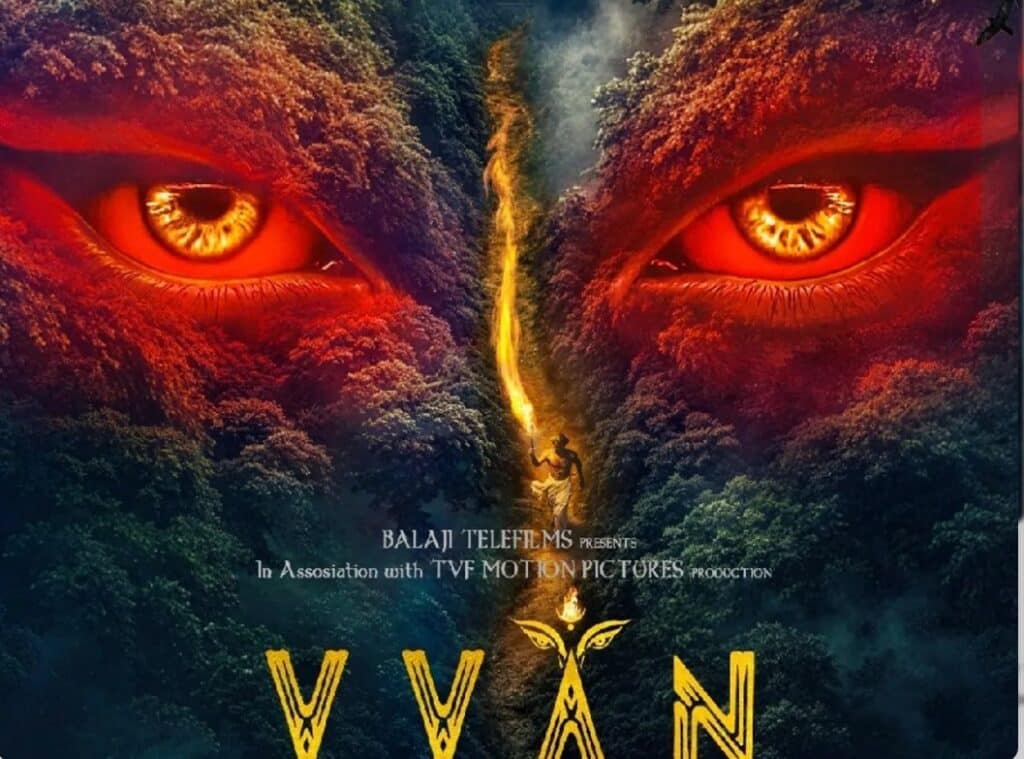
What The Vvaan: Force of the Forrest actually is
Directed by Deepak Kumar Mishra in his feature-film debut and written by Arunabh Kumar of The Viral Fever, the film is a Hindi-language fantasy thriller produced by Shobha Kapoor, Ekta Kapoor, Arunabh Kumar and Niraj Kothari under Balaji Motion Pictures, TVF Motion Pictures and 11:11 Productions. Pen Marudhar handles theatrical distribution. The listed runtime sits in an awkward range across sources — Wikipedia cites 136 minutes, while several listings still carry 2 hours 25 minutes to 2 hours 45 minutes — but the shape of the film is consistent: a folklore frame, a family land plot, a forbidden grove, and a third act that wants spectacle.
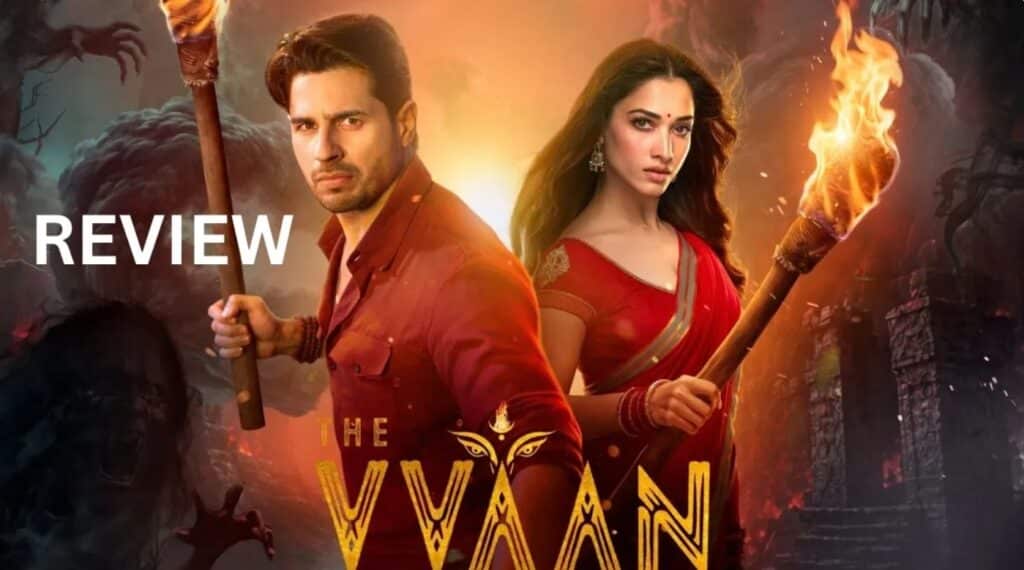
Sidharth Malhotra plays Rishi Kumar, a Mumbai-based civil engineer and self-declared rationalist. Tamannaah Bhatia plays his wife, Mamta. Around them stand Anup Soni as elder brother Shashi, Shweta Tiwari as sister-in-law Shushila, Sunil Grover as Deepak, and Maniesh Paul as Ved Prakash, the camera-happy friend everyone calls VP. Supporting faces include Durgesh Kumar, Milind Gunaji, Avtar Gill, Sulabha Arya, Sundip Ved and Akshaan Sehrawat.
The official logline is clean enough to print on a ticket stub: a rational urban man defies his ancestral village’s forbidden forest, awakens a divine force, and is pushed into becoming an unlikely protector. The film is not a documentary about that temple. It is fiction built on a living local belief. That distinction matters, because the marketing has sometimes blurred inspiration and “true story.”
The rule that holds the whole movie together
Devanchal — the film’s Bihar village — lives by one sentence the trailer drilled into public memory: after sunset, entry into the Vvaan is forbidden. In the film’s mythology, Van Devi once trapped dark forest entities, often called Bhutakke or phuddakke depending on the write-up, inside the grove. By day they are contained. After dusk the contract changes. A royal heir once received a bracelet that allowed safe night passage. Break the boundary, and protection becomes punishment.
That single village law does more dramatic work than most of the dialogue. It is simple, visual and culturally specific. Audiences understand a locked door. A locked forest is better, because the lock is faith.
Rishi does not arrive as a pilgrim. He arrives as a man who needs money. Six years earlier, Mamta lost a pregnancy in circumstances the film ties to worship and trauma. The couple is considering IVF. The ancestral plot — inconveniently sitting against or inside the sacred belt — looks like a way to fund treatment and, for other characters, a way to unlock development. Faith is not the only force in Devanchal. Land prices are sitting in the same room.
The real shrine behind the fiction
The most interesting thing about The Vvaan may not be a plot twist. It is the source. Writer Arunabh Kumar has said he visited Maa Van Devi Temple near Bihta in Patna district, spoke to priests and villagers, and carried the sunset restriction into the screenplay. The shrine sits about 35 kilometres from Patna, near the meeting of Amhara, Raghopur and Kanchanpur. Devotees worship a sacred pind, not a towering idol. Local tradition holds that the priest leaves after evening prayers and that the forest should not be entered after dark. Some accounts say the goddess herself moves through the grounds at night.
Folklore around the temple links Van Devi to Maa Vindhyavasini of Vindhyachal through a devotee named Vidyanand Mishra, who, in the story, was told in a dream to bring a portion of the sacred pind closer to home. The grove became the goddess’s address, and the forest name stuck. Historians have not handed the shrine a neat archaeological birth certificate; popular memory puts it at 350 to 400 years. The film borrows the mood of that memory, then invents kings, bracelets, creatures and a chosen bloodline. Treat the temple as real. Treat the demons as cinema.
Story without spoiling the third-act fireworks
The opening move is mythic: a king enters the grove after dark to save a pregnant queen, meets the goddess, and receives a covenant. Cut to present-day Mumbai, where Rishi and Mamta live with grief that has hardened into scepticism. Family pressure, festival timing and a land conversation pull them to Devanchal. VP tags along with a camera and the internet’s worst instincts. Deepak appears helpful in the way men appear helpful when they already have a map of the property.
Rishi’s rebellion is almost bureaucratic. He wants proof. He wants the forest to be only trees so that trees can become a deal. The film is honest enough, early on, to admit that disbelief can be a kind of greed wearing a lab coat. When he crosses the line after sundown, the movie stops being a family drama and starts being a possession-of-the-landscape story. Dreams of King Vikramaditya, a bracelet, an heir’s claim, and the sense that Rishi is repeating an old mistake all arrive on schedule.
The first hour is the better hour. Village textures, family friction, Shweta Tiwari’s sharp domestic authority, and the unease of a grove that seems to watch back — these are the passages where Mishra’s Panchayat-adjacent eye for hinterland life almost makes a folk thriller. Then the film decides it must explain its own myth in increasing volume. Mystery dies when a screenplay becomes a brochure.
Sidharth Malhotra: the sceptic who has to grow a spine and a soul
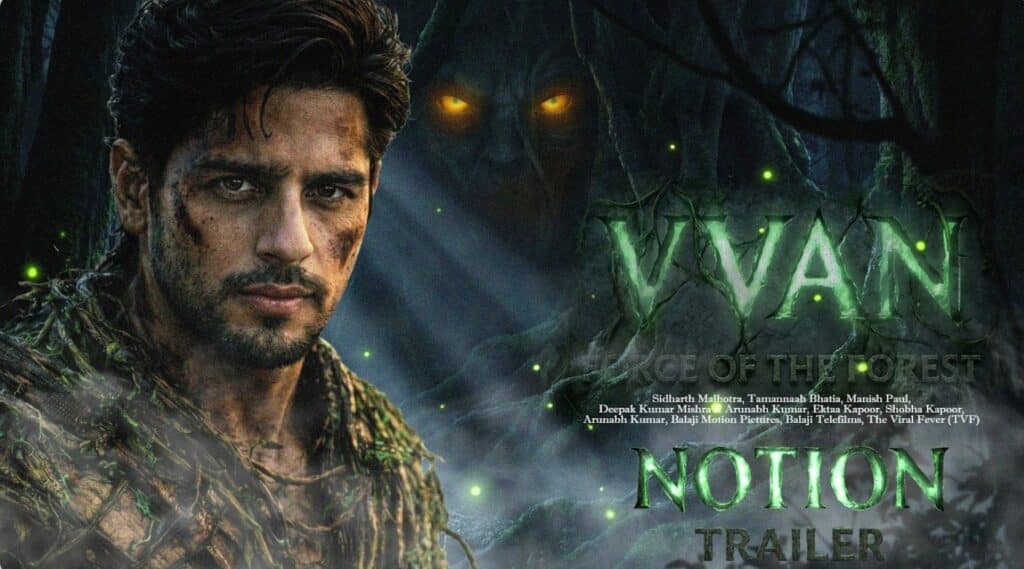
Malhotra has spent a decade looking like the most reasonable man in the room. Here that quality is the character. Rishi is not written as a philosopher. He is written as an engineer who thinks a rule is only a rule if it survives measurement. The performance works best when he is irritated, cornered, or physically committed in the survival stretches. It thins out when the script asks him to deliver grief in single-take speeches that feel workshopped rather than lived.
The dual pull — present-day Rishi and the ancestral echo some listings tag as Veer or the king’s line — gives him a costume change and a destiny speech. Hindi fantasy loves a chosen one. The Vvaan is no exception. Whether the audience accepts the transformation depends on patience with the last forty minutes, which trade dread for creature-feature blocking and glowing eyes.
Still, Malhotra is not the problem. He is a sturdy centre in a film that keeps changing the genre mid-sentence. After Param Sundari, this is a visible attempt to reclaim mass-hero scale. The body is willing. The writing does not always give that body a thought worth carrying.
Tamannaah Bhatia and the name that does too much work
Naming the wife Mamta in a story about lost pregnancy is the kind of on-the-nose choice that critics will quote for years. Hollywood Reporter India treated it as evidence of a film that cannot trust subtext. The jab is fair. The performance is more generous than the naming.
Tamannaah is asked to be the believer in the marriage, the wounded body, the festival presence, and later a partner in the forest’s moral argument. She looks every bit the festival poster and, in stretches, more than that. The limitation is scope. Several reviews note that Mamta is essential to the theme and still underwritten as a person. When the film remembers she is not only a symbol of maternal longing, she steadies the story. When it forgets, she becomes the red-saree argument standing next to the hero’s doubt.
The pairing has an easy screen warmth in the Mumbai passages and a more interesting tension once Devanchal starts testing the marriage. A better film would have let Mamta argue theology instead of only embodying it.
The supporting cast: where the village actually lives
Sunil Grover is the casting surprise and the film’s most discussed supporting turn. Deepak is not a sketch-comedy refugee. The role is shaded, then revealed, then — depending on the critic — either a welcome left turn or a twist the audience can see from the highway. Even reviewers who dislike the film tend to concede that Grover came to act, not to wink. That matters in a production that otherwise flirts with television grammar.
Anup Soni does what Anup Soni reliably does: he makes a household feel like a household. Shweta Tiwari, stepping from the long shadow of Hindi television into a theatrical sister-in-law role, brings heat and territorial instinct. The film could have given both of them a second-half argument worthy of the first-half setup. It mostly does not.
Maniesh Paul, as VP the vlogger, is the pressure valve. In a folk thriller that keeps threatening to become a sermon, a man who wants a viral forest clip is useful. He is also the audience’s guilty twin. Plenty of viewers would also walk to the tree line with a ring light. Sulabha Arya’s Kaaki gets some of the film’s lightest and sharpest business. Durgesh Kumar’s journalist and the village elders fill out a world that feels more inhabited than many big-studio “interior India” sets.
Direction, writing and the Kantara-shaped shadow
Hindi cinema has spent three years trying to metabolise what Kantara proved: regional deity stories can be industrial events if the belief system feels locally specific and the climax earns its possession. Tumbbad remains the art-house cousin — greedy, damp, cursed. The Vvaan wants a piece of both markets. It wants family audiences, Ekta Kapoor’s festival reach, TVF’s writing reputation, and the new folk-horror ticket buyer.
Mishra knows faces in a courtyard. That is an asset. The camera lingers on food, gossip, festival prep, the way a village polices a sceptic without raising its voice. Arunabh Kumar’s script is more conflicted. It has a rich premise and a nervous need to keep explaining why the premise is rich. Dialogues by Anandeshwar Dwivedi swing from lived-in Purvanchal cadence to sudden mythological captioning.
The result is a film that starts as a folk mystery and ends as a conventional saviour narrative. Dark forces need a face. The heir needs a trial. Good must be photogenic. Several mainstream reviews that liked the film — Bollywood Life and similar outlets scoring around four stars — praise exactly this completeness: folklore plus family plus action plus a moral. The harsher notices, from Hollywood Reporter India to cooler national reviews, see a devotional video that borrowed a feature budget. Rotten Tomatoes, with a small sample of 12 reviews at the time of writing, sat at 33 percent with an average near 4.8/10. Times of India landed at 2.5/5. Audience scores on IMDb opened much warmer, as early fan rating often does. The split is the story.
A useful way to watch the film is to ask which movie it wanted to be at minute 40 and which movie it became at minute 110. The first movie is better.
Themes the film almost sticks
Three arguments run under the plot, and each deserved a leaner movie.
The first is faith versus measurement. Rishi’s atheism is not intellectual fashion; it is scar tissue. The film is sympathetic to the scar and impatient with the fashion. That is a legitimate dramatic stance. It becomes less legitimate when the only allowed ending is conversion-by-miracle. A smarter script would have let reason and ritual keep some of their dignity.
The second is land. Ancestral property on the edge of a sacred grove is the most Indian conflict available in 2026. Highways, fertility clinics, family prestige and a goddess who will not relocate — this is the country’s actual argument, not a costume drama. The Vvaan sees the argument and then wraps it in a chosen-one ribbon. Greed is easier to hate when it has a villain’s moustache. It is harder, and better, when it sounds like a reasonable EMI.
The third is ecology wearing a bindi. Dark forces bound to a forest are a folk way of saying the grove is not raw material. The film understands that instinctively. It is less sure how to dramatise it without a final battle. Environmental horror works when the land refuses to be used. Superhero folklore works when a man hits the monster. The Vvaan wants both payoffs and splits the difference.
Who the film is for, and who should wait for the rental
The Vvaan: Force of the Forrest will work for viewers who want a U/A mythological thriller with festival colour, a recognisable star couple, and a village-versus-city argument they already believe. It will frustrate viewers who came for sustained dread, rigorous world-building, or the raw possession grammar of the better southern folk films.
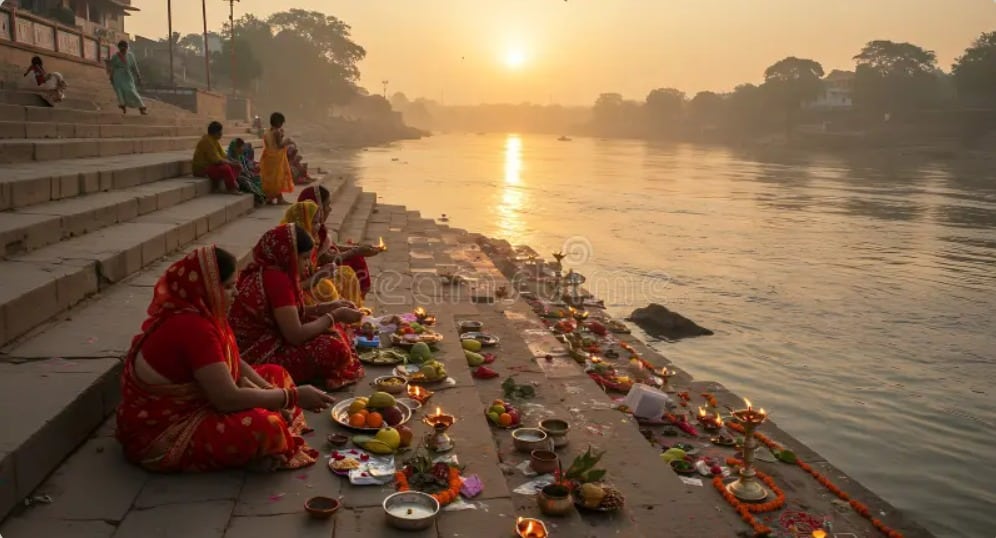
Take children only if they can handle creature imagery and grief around pregnancy loss. The certificate is U/A, not a cartoon. Take grandparents if they want Chhath songs and a goddess who still answers. Take the friend who quotes Tumbbad only if that friend has a sense of humour about compromise.
Final verdict
The Vvaan: Force of the Forrest is not a disaster and not a revelation. It is a sincere, over-explained, sometimes handsome attempt to turn a Bihar grove and a 400-year-old hush into multiplex mythology. Sidharth Malhotra holds the centre. Tamannaah Bhatia gives the marriage a pulse. Sunil Grover walks off with the most interesting human secret. Manu Anand’s camera believes in trees. The screenplay believes in speeches.
The forest in this film is at its best when it is allowed to be older than the hero. The movie is at its worst when it becomes a guided tour of its own legend. Stay for the first-hour unease, the courtyard acting, and the strange thrill of a mainstream Hindi film admitting that a village rule might be smarter than a city plan. Forgive, or fast-forward through, the stretches where the goddess has to compete with the edit.
Rating: 2.8 / 5
A watchable folk-fantasy with a real shrine behind it, a star who tries, and a second half that keeps stepping on the very mystery it planted.
Quick facts for readers scanning on a phone
- Film: The Vvaan: Force of the Forrest (also styled Vvaan / VVAN)
- Release: 25 September 2026, theatrical; Hindi; U/A
- Director: Deepak Kumar Mishra
- Writer: Arunabh Kumar; dialogues by Anandeshwar Dwivedi
- Lead cast: Sidharth Malhotra, Tamannaah Bhatia
- Key support: Anup Soni, Shweta Tiwari, Sunil Grover, Maniesh Paul
- Inspiration: Folklore of Maa Van Devi Temple, Bihta, Patna district
- Music: Tanishk Bagchi, Vishal Mishra, Amit Trivedi; score by Sandeep Shirodkar
- Early box office: Day 1 India net roughly ₹7–8 crore; modest weekend build
- Critic range: roughly 2.5 to 4 stars depending on outlet; Rotten Tomatoes in the low thirties on a small sample
follow me on SPOTIFY As Discovering With Dev