
The Conversation We Were Never Allowed to Have
Money was not discussed in our house. Not openly, anyway.
You could feel it — in the tightness of my mother’s jaw when the school fee notice arrived. In the way my father would change the topic if someone asked about Money.
We were a middle-class family in every sense that phrase carries in India. Not poor enough to qualify for government schemes. Not rich enough to feel secure. Perpetually in the middle — which, as any Indian middle-class family will tell you, is its own peculiar kind of anxiety.
Nobody ever sat me down and explained how money actually works. Not my parents. Not my school. Certainly not my college, where finance meant CA entrance exams and stock tips shared in the canteen. I grew up absorbing money lessons through osmosis — through overheard arguments, through relatives who “made it” and became family legends, through the ones who didn’t and became cautionary tales whispered at weddings.
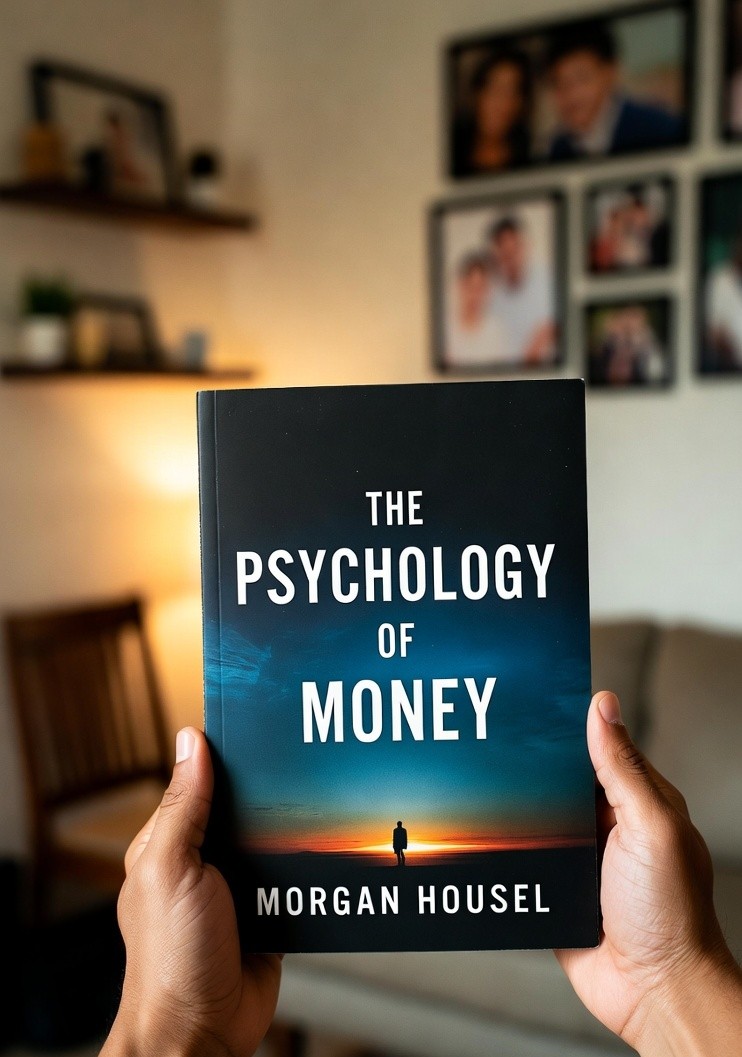
Then I read The Psychology of Money by Morgan Housel.
And for the first time in my life, I felt like someone was finally having the conversation. Not the one about mutual funds or tax-saving instruments or which IPO to apply for. The real conversation. About fear. About greed. About why we make terrible decisions with money even when we know better. About why the auto-rickshaw driver and the IIM graduate can both end up broke, and why a school dropout with patience can end up wealthy.
This is that conversation. Told the Indian way.
Who Is Morgan Housel — And Why Should an Indian Care?
Morgan Housel is an American author and partner at the Collaborative Fund. He is not a billionaire. He is not a stockbroker. He does not have a YouTube channel where he shows you his luxury car collection as proof that his advice works. He is, by his own description, a writer who thinks about money — carefully, historically, and with rare psychological honesty.
The Psychology of Money was published in 2020 and has since sold over four million copies worldwide. It has been translated into dozens of languages. It sits on the bookshelves of CEOs and college students alike. And while Housel writes from an American context, the core truths of this book are not American at all. They are human. Which means they are very, very Indian.
Because no matter where you are in the world, money makes people do irrational things. It makes us panic-sell during a market crash and greed-buy during a bull run. It makes us buy cars we can’t afford to impress people we don’t like. It makes us sacrifice our health to build wealth and then spend our wealth trying to recover our health.
Housel doesn’t judge any of this. He explains it. And in the explaining, he somehow makes you feel less alone in your own financial stupidity — which, as it turns out, is the first step toward doing better.
The very first idea that hit me like a truck: money is 80% behaviour and only 20% knowledge.
We Indians are obsessed with “how to earn more.” CA courses, stock tips in family WhatsApp groups, YouTube gurus promising 100% returns. But Morgan Housel says the real game is not how much you earn — it’s how you behave with what you already have.
In our culture, we celebrate the cousin who cracked a 25 LPA package. We rarely celebrate the cousin who quietly saves 40% of his salary every month and never shows off. Housel flips the script: the second one is actually richer.
“Getting money and keeping money are two completely different skills.” That line stayed with me for days.
The Salary That Broke the Myth of More
There is a story in the book that I want to tell you. Not Housel’s version — my version. Because his version is American and this one should feel familiar.
I have a friend — let us call him Karan — who works in a tech company in Bengaluru. He earns well. Really well, by any reasonable Indian standard. When he got his first big appraisal a few years ago, he messaged me at midnight, genuinely ecstatic. “Bhai, ab toh set ho gaye.”
Six months later, he had a new bike. A year later, a better apartment in a pricier locality. Eighteen months later, the car. The subscriptions. The weekend trips. The restaurant bills that would have made his college self faint.
And somehow, despite earning three times what he made three years ago, he told me last Diwali: “Yaar, paisa hi nahi bachta.”
Housel calls this the Hedonic Treadmill, though he frames it with more elegance than that clinical term deserves. The goalposts of “enough” keep moving. Every raise gets absorbed by lifestyle. Every upgrade creates a new baseline. And the finish line of financial peace keeps retreating into the horizon, no matter how fast you run.
The most dangerous financial lie we tell ourselves is: “Once I earn X, I’ll be fine.” But X keeps changing. And the anxiety doesn’t go away with the raise — it just wears a more expensive outfit.
The antidote Housel offers is not austerity. It is one word, radical in its simplicity: enough. Know what enough looks like for you — specifically, concretely, emotionally. Not what Instagram says is enough. Not what your colleagues’ lifestyles imply is enough. What actually makes you feel secure, comfortable, and free.
This is extraordinarily difficult in India, where financial comparison is practically a competitive sport. We measure ourselves against neighbours, cousins, batch-mates, and the vague aggregated wealth of people we follow online. We are swimming in other people’s highlight reels and calling it a benchmark.
Knowing your “enough” is not a financial strategy. It is an act of genuine self-knowledge. And according to Housel, it might be the most important financial decision you ever make.
Compounding: The Concept We Think We Understand But Don’t
Ask any Indian who has spent ten minutes researching mutual funds and they will tell you about compounding. They have heard it. They have nodded at it. They have probably watched the animation where a snowball rolls down a hill and becomes an avalanche.
And then they redeemed their SIP after eight months because the returns looked disappointing.
Housel’s chapter on compounding is not about the mathematics. It is about the psychology of time — which is far harder to grasp.
In India, this is compounded — forgive the pun — by a culture of immediate obligation. We are expected to fund weddings, support parents, help siblings, contribute to family emergencies, maintain appearances at social functions. These are not frivolous expenses. They are the load-bearing walls of Indian family life. But they make long-term, undisturbed compounding extraordinarily difficult for the average middle-class family.
Housel does not offer a magic solution. He offers honest acknowledgement: the biggest obstacle to compounding is not the stock market. It is your inability to leave money alone long enough for time to do its work. In a culture that demands constant financial availability, that is a profound and uncomfortable truth.
Reasonable Over Rational: The Permission Slip You Didn’t Know You Needed
This might be my favourite chapter in the entire book. And I want to be very clear about why.
Housel argues that you should not aim to be perfectly rational with money. You should aim to be reasonable.
The difference sounds small. It is enormous.
Pure financial rationality would tell you: buy term insurance and invest the rest. Never carry emotional investments in your portfolio. Sell underperforming assets without sentiment. Optimise every rupee.
But humans are not purely rational. We are emotional, tribal, nostalgic, anxious creatures who have irrational attachments to specific stocks (maybe you bought Infosys because your father believed in it), to specific savings habits (the recurring deposit your mother maintained because it felt “safe”), to specific financial behaviours that may not be mathematically optimal but make you sleep at night.
Housel says: that’s fine. Sleep matters. Peace of mind matters. The financial strategy you can actually stick to for twenty years is infinitely better than the optimal strategy you abandon after eighteen months because it makes you anxious.
This is liberating for the Indian investor specifically, because we carry so much financial emotion. We have accounts in banks our grandfathers trusted. We have insurance policies our parents bought in the 1990s that make no financial sense today but that feel like family heirlooms. We mix money and relationship in ways that Western personal finance textbooks would call irrational and that Indian lived reality calls simply — normal.
Housel gives you permission to be human. To make the slightly-less-optimal choice if it means you’ll actually stick to it. To prioritise sleeping at night over maximising every last basis point of return.
In a field full of people telling you exactly what you should do, that permission is quietly revolutionary.
The Indian Man in the Car Paradox
One of the most powerful stories in the book is the “Man in the Car Paradox.” People don’t actually want a fancy car. They want the respect and envy that comes with it.
In India, this hits different.
We don’t buy that big SUV for comfort. We buy it for the “shaadi mein entry” moment. We don’t book a destination wedding because we love the hills — we do it because society is watching. Housel calls it out beautifully: wealth is what you don’t see. The real rich person is the one whose bank balance you can’t guess from their lifestyle.
I know a friend who drives a 12-year-old Alto but has ₹45 lakhs in mutual funds. His relatives still feel sorry for him. Meanwhile, the guy with the new Creta and three EMIs is treated like a king. This book will make you smile and feel a little sad at the same time.

Save Money. But Not for Any Reason.
One of Housel’s most counterintuitive arguments is this: the best reason to save money is not for any specific goal.
Not for a house. Not for a car. Not for retirement, technically.
Save money because savings give you options. Savings give you the ability to say no. Savings give you time — to think, to wait, to let opportunities come to you rather than chasing them from a position of desperation.
He calls this having room for error. Or in plain language: having a buffer between you and the world’s inevitable surprises.
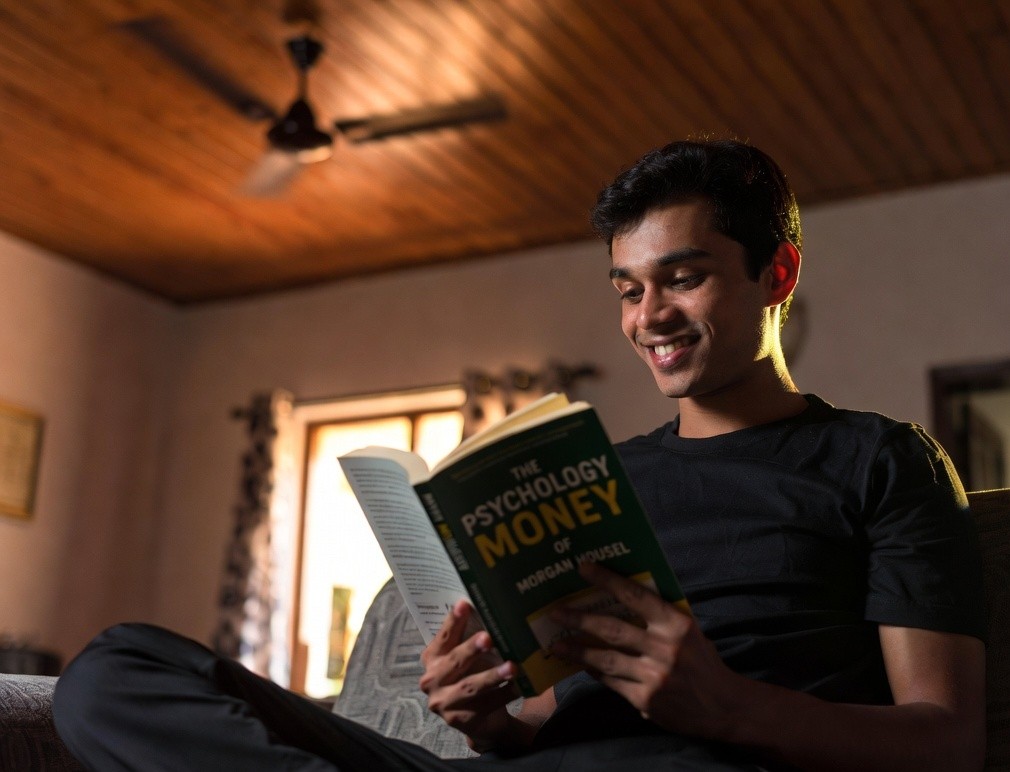
The Psychology of Money Lessons I’m Using in My Daily Indian Life
Here’s what I actually changed after reading this book:
- I stopped comparing my salary with my batchmates. I started tracking my net worth instead.
- I created a “Freedom Fund” SIP that I’m not allowed to touch even in emergencies.
- I stopped buying things to impress people who don’t even care.
- Every time I feel the urge to splurge, I ask: “Is this a need or a desire for respect?”
One small habit that’s working wonders: after every salary credit, before anything else, I transfer my saving amount to a different account. Out of sight, out of mind. Pure desi jugaad.
Should You Read The Psychology of Money in India in 2026?
Let me be honest with you — the same way this book is honest.
This book will not make you rich overnight. It will not help you win the lottery or get that dream foreign job. What it will do is change how you think about every rupee that comes into your life and every rupee that leaves it.
I read it in a mid-sized Indian city — juggling a job, family expectations, rising inflation, wedding talks, and that constant pressure to “show progress.” The book didn’t give me a get-rich-quick formula. It gave me something far more valuable: peace with money.
Morgan Housel writes simply, like a wise elder explaining things over evening chai. No complicated charts. No jargon. Just stories that stay with you.
If you’ve ever felt money stress despite earning well… If your family argues about money every festival… If you want to build real wealth without sacrificing today’s happiness…
Then this book is for you.
ReviewPoints.com – Honest Reviews & Real Life Lessons
Have you read The Psychology of Money? What’s the one money lesson that changed how you think or spend? Drop it in the comments below — I read every single one. Let’s talk real money, desi style.
Share this review with that one friend or cousin who needs to read it. Your family’s WhatsApp group might thank you later. ❤️
Independent narrative review written for educational purposes.